Pruning Apple Trees: Timing and Techniques
Pruning is a fundamental practice in orchard management and home fruit growing, directly influencing the health and productivity of apple trees. The process involves the selective removal of branches to shape the tree, improve light penetration, and encourage the development of fruiting wood. However, the effectiveness of pruning depends greatly on when it is performed and how the cuts are made. This article provides an informational overview of the key considerations for timing and techniques in apple tree pruning, without prescribing specific outcomes.
Understanding the growth cycle of apple trees is essential before making any cuts. Apple trees, like many fruit trees, have specific responses to pruning that vary with the season and the tree’s age. Proper pruning can help maintain a balanced structure, reduce the risk of disease, and promote better air circulation. Conversely, poorly timed or executed pruning can stress the tree and potentially reduce its vigor. This guide will outline general principles and methods, emphasizing the importance of observation and adaptation to local conditions.
Why Timing Matters in Apple Tree Pruning
The timing of pruning influences how the tree reacts and can affect its subsequent growth and fruiting. In general, apple trees are pruned during the dormant season, which in many regions occurs in late winter or early spring before new growth begins. During dormancy, the tree is not actively growing, and pruning cuts will heal quickly when the tree breaks dormancy. Pruning at this time also allows for a clear view of the tree’s structure, as the absence of leaves makes it easier to identify branches that need removal.
Late winter pruning is often preferred because it minimizes the risk of certain diseases that are more active in warmer, wetter conditions. For example, fire blight, a bacterial disease, can enter through pruning wounds, but its spread is less likely when cuts are made during cold, dry periods. Additionally, pruning in late winter can stimulate vigorous new growth in the spring, which is beneficial for young trees that need to establish a strong framework.
Conversely, pruning in early winter or late autumn is generally discouraged in many areas, as the tree may not have fully hardened off, and the cuts might dry out or be susceptible to cold damage. Summer pruning is sometimes performed on mature trees to control size and thin excessive growth, but it is typically lighter and more selective. The optimal timing may vary based on the local climate and the specific health of the tree, so it is important to consider local conditions and observe the tree’s condition.
Essential Pruning Techniques for Healthy Structure
Pruning techniques can be categorized by the type of cut and the branch being removed. The two primary cuts are heading cuts and thinning cuts. Heading cuts involve removing the terminal portion of a branch, which encourages branching below the cut. This technique is often used to stimulate growth in a particular area or to shape young trees. Thinning cuts, on the other hand, remove an entire branch back to its point of origin or to a lateral branch, which opens up the canopy without stimulating excessive regrowth.
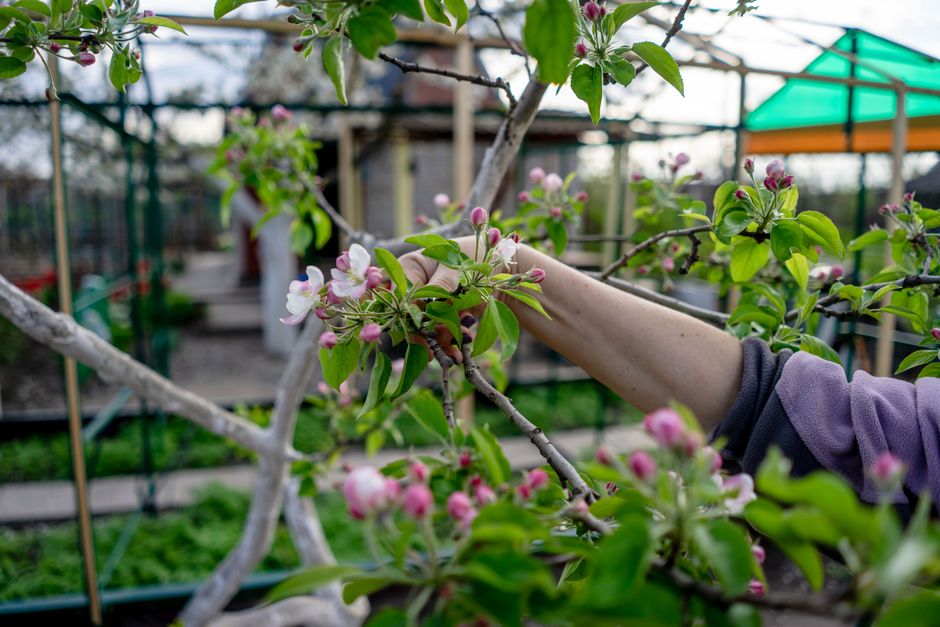
For apple trees, a combination of these cuts is used to achieve a balance between vegetative growth and fruiting. When making any cut, it is crucial to use clean, sharp tools to create smooth cuts that heal quickly. The angle and placement of the cut are also important: cuts should be made just above a bud or lateral branch that is oriented in the desired direction of growth. Avoid leaving stubs, as they can become entry points for disease and pests.
Another critical aspect is the branch collar, the swollen area at the base of a branch. When removing a branch, the cut should be made just outside the collar, without damaging it, to facilitate proper wound sealing. Proper pruning cuts are typically angled slightly to shed water, but avoid cutting too close to the trunk or leaving long stubs.
Common Pruning Methods Explained
Several training systems exist for apple trees, each with its own pruning approach. The central leader system is common for standard and semi-dwarf trees, where a main vertical trunk is maintained, and lateral branches are spaced along it. Pruning in this system aims to develop strong branch angles and remove competing leaders. The open center (or vase) system is often used for dwarf trees, where the central leader is removed to encourage a bowl-shaped canopy.
Whichever method is chosen, the goal is to create a tree that allows sunlight to reach the inner branches and fruit, which is essential for proper fruit development. Pruning also involves removing dead, diseased, or damaged wood, which can harbor pests and pathogens. These should be removed promptly regardless of the season, as they can affect the tree’s overall health.
It is also important to consider the age of the tree. Young apple trees require formative pruning to establish a strong structure, while mature trees need maintenance pruning to maintain their shape and productivity. Over-pruning can be as harmful as under-pruning, as it may lead to excessive vegetative growth at the expense of fruit production. Therefore, the intensity of pruning should be adjusted based on the tree’s vigor and growth response.
Seasonal Considerations and Climate Impacts
The local climate plays a significant role in determining the best time to prune apple trees. In regions with harsh winters, pruning is often postponed until late winter to avoid exposing fresh cuts to extreme cold. In milder climates, pruning might be done earlier. Additionally, the specific microclimate of the orchard or garden can influence the tree’s dormancy period.
It is also worth noting that pruning during periods of active growth can cause the tree to lose moisture and become stressed, especially in hot, dry weather. Therefore, heavy pruning is generally avoided during summer, except for certain corrective measures. For trees affected by diseases such as fire blight, pruning should be done during dry weather to reduce the spread of bacteria, and tools should be disinfected between cuts.
Another consideration is the fruiting habit of the apple tree. Some varieties bear fruit on spurs (short, stubby shoots), while others bear on the tips of longer branches. Recognizing the fruiting pattern of the specific cultivar is essential to avoid removing wood that would have produced fruit. In general, thinning cuts are preferred over heading cuts on mature trees to reduce excessive shoot growth and encourage spur development.
Aftercare and Monitoring
After pruning, it is important to monitor the tree’s response and provide appropriate care. Wound dressings or sealants are generally not recommended, as they can trap moisture and delay natural healing. Instead, ensuring proper nutrition and irrigation can support the tree’s recovery. Observing the subsequent growth can inform future pruning decisions.
For example, the presence of water sprouts (vigorous upright shoots) or suckers (shoots from the rootstock) may indicate the tree is under stress or has been pruned too heavily. Prompt removal of these growths is often part of maintenance pruning. Also, the overall health of the tree, including leaf color and shoot growth, can provide insights into whether the pruning strategy is appropriate.
In some cases, renovation pruning may be necessary for overgrown or neglected apple trees. This involves a gradual, multi-year approach to restore the tree’s shape and vigor without causing undue stress. Such projects should be undertaken with careful planning and perhaps in consultation with local horticultural experts, as the tree’s response can be unpredictable.
Effective apple tree pruning is not just about making cuts; it is a thoughtful practice that considers the tree’s health, environment, and growth responses. Observing and adapting are key elements often advocated by professionals at GreenSprout Advisors.
Conclusion
Pruning apple trees is a nuanced horticultural practice that requires attention to timing, technique, and the unique characteristics of each tree. By pruning during the dormant season, using appropriate cuts, and considering the tree’s age and fruiting habit, growers can positively influence the tree’s structure and potential productivity. However, outcomes depend on many factors beyond pruning, including soil quality, water availability, and pest management.
Neutral and informed pruning approaches prioritize the long-term health of the tree, and professional guidance may be beneficial in complex situations. Remember that each tree is an individual, and its response to pruning may vary. Therefore, a cautious, observational approach that adapts to the tree’s feedback is often the most sound strategy.